Feds Push Cyan Lights For Driverless Cars
Federal regulators propose standardized blue-green marker lamps to signal when autonomous systems are controlling vehicles on public roads.
By Amy Swan ·
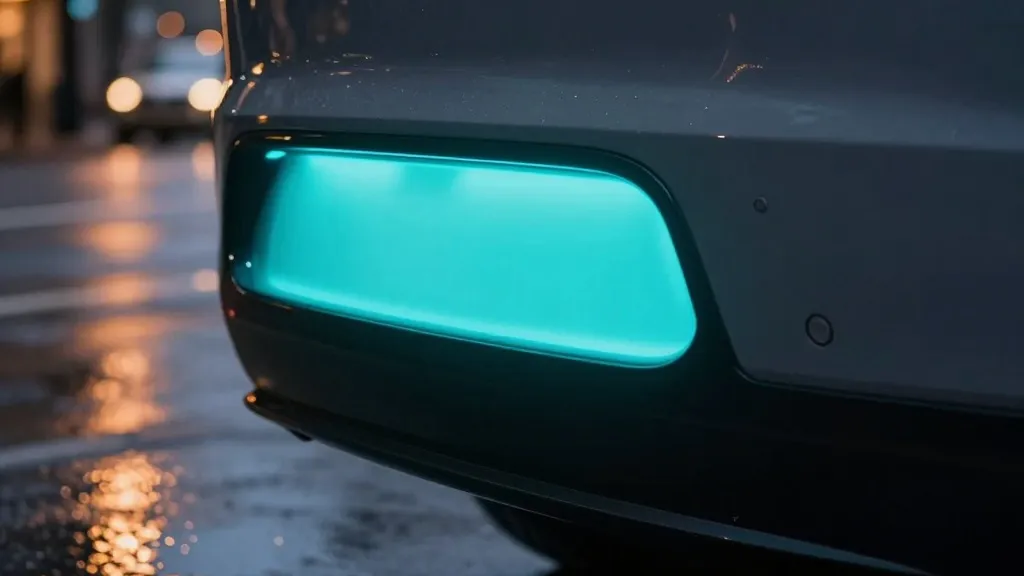
The National Highway Traffic Safety Administration has proposed a definitive visual signal for driverless vehicles, designating cyan-colored marker lamps as the primary method to indicate automated operation. This move ends years of industry debate over various signaling methods, including flashing text and audio alerts, by establishing a single, consistent standard for autonomous vehicles. The proposal aims to clarify the status of these cars for law enforcement and other road users, ensuring immediate recognition when a human is not at the wheel.
Under the revised Federal Motor Vehicle Safety Standard No. 108, the agency seeks to fill a visual gap in current traffic signals. Existing regulations already allocate red, amber, white, and flashing blue or red lights for functions such as braking, turning, and emergency use. By selecting a blue-green hue, regulators believe they can introduce a distinct identifier that does not conflict with established color codes, reducing the risk of confusion on the road.
While the cyan lights would be optional for manufacturers, the proposal mandates strict standards for their color, brightness, and placement. This ensures that if automakers like General Motors, Mercedes-Benz, or robotaxi operators such as Waymo, Nuro, and Zoox choose to install these lamps, the setup remains uniform and legally compliant. The agency hopes this creates a national baseline rather than a fragmented landscape of inconsistent signals from different manufacturers.
The proposal also includes significant regulatory cleanup to accommodate vehicle designs without human drivers. NHTSA plans to eliminate requirements for physical interior controls that are unnecessary for autonomous operation, such as manual beam shifters, turn levers, and hazard switches. Additionally, the agency is updating testing standards to align with modern LED architectures, removing administrative barriers that currently complicate the development of human-free vehicle platforms.
This initiative is part of a broader effort by the Department of Transportation to streamline the deployment of autonomous vehicles. The goal is to simplify the certification process for cars that may lack traditional controls like steering wheels and pedals. By standardizing lighting and removing obsolete mechanical requirements, the government aims to accelerate the integration of these advanced systems into the national fleet.
However, the push for new standards occurs alongside continued enforcement of existing rules. Regulators recently opened an audit into the Tesla Cybercab to review the technical data used for its certification. The inquiry focuses on the vehicle’s lack of specific design features, including sideview mirrors, pedals, and a steering wheel, which are currently mandated under the Federal Motor Vehicle Safety Standards. This dual approach highlights the tension between modernizing regulations for new technology and maintaining current compliance frameworks.
The proposed changes mark a significant shift in how federal agencies view the interface between autonomous technology and public road infrastructure. By codifying the use of cyan lights and simplifying mechanical requirements, NHTSA is laying the groundwork for a more integrated future of driverless transportation. The final rule will determine how quickly manufacturers can adopt these streamlined designs and signal their automated status to the public.
Source: The Verge